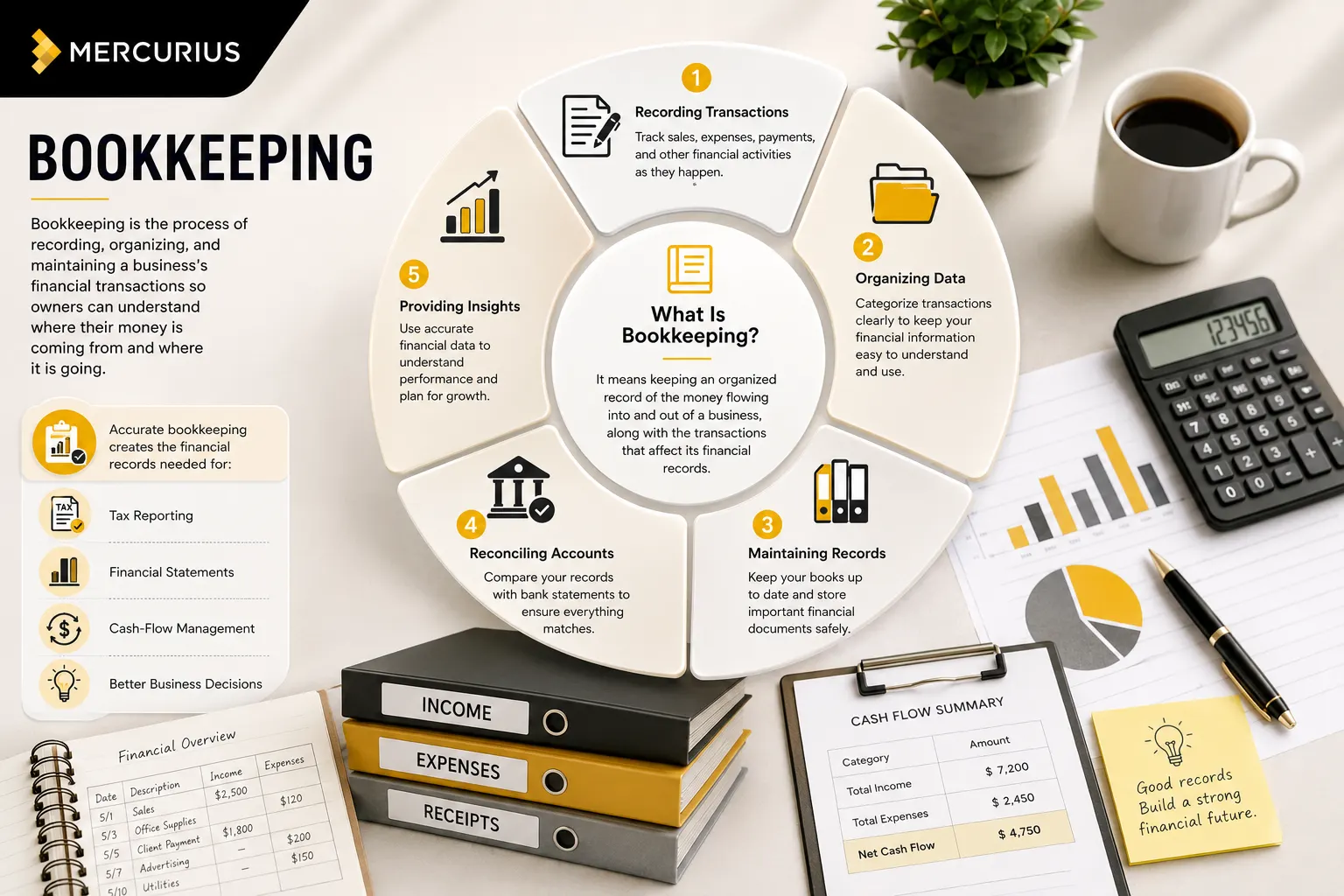
Bookkeeping is the process of recording, organizing, and maintaining a business’s financial transactions so owners can understand where their money is coming from and where it is going. For US small businesses, effective bookkeeping creates the financial records needed for tax reporting, financial statements, cash-flow management, and better business decisions.
Whether you manage bookkeeping yourself or work with a professional, understanding what is bookkeeping can help you build a stronger financial foundation for your business.
What Is Bookkeeping?
Bookkeeping means keeping an organized record of the money flowing into and out of a business, along with the transactions that affect its financial records.
It covers activities such as tracking sales, recording expenses, categorizing transactions, reconciling accounts, and maintaining financial records.
Simple Definition
In simple terms, bookkeeping means keeping an accurate record of what your business earns, spends, owns, and owes.
A typical bookkeeping system records transactions such as:
- Customer payments and sales
- Business purchases and operating expenses
- Payroll and related expenses
- Loan payments
- Credit card transactions
- Bank deposits and withdrawals
The goal is to ensure that every financial transaction is recorded in the appropriate account and supported by relevant documentation.
Bookkeeping for Small Businesses
Bookkeeping gives small business owners a clear picture of their financial health. It helps track revenue, expenses, cash flow, and outstanding invoices while keeping financial records organized for tax reporting and everyday business decisions.
Bookkeeping in Accounting
Bookkeeping forms the foundation of the accounting process. It captures and organizes financial transactions, giving accountants the information they need to prepare financial reports, analyze business performance, and support tax and financial decisions.
Without consistent, accurate bookkeeping, even experienced accountants can be left working with incomplete or unreliable financial data, especially when closing the books properly at each period-end.
Why Bookkeeping Matters
Bookkeeping gives small business owners a clear, up-to-date view of their financial position. Accurate records make it easier to understand where money is coming from, where it is being spent, and whether the business has enough cash to meet its obligations.
Organized Financial Records
A consistent bookkeeping process helps you monitor:
- Business income and expenses
- Accounts receivable and payable
- Cash flow
- Assets and liabilities
Keeping these records current supports tax reporting and financial reporting while making it easier to spot unpaid invoices, unusual expenses, or changes in business performance.
More importantly, reliable financial records give owners the information they need to evaluate the business’s financial health and make informed decisions.
What Does a Bookkeeper Do?
A bookkeeper maintains a business’s financial records and keeps day-to-day transactions organized and up to date. Their work helps ensure that financial information is recorded accurately and remains reliable for reporting, tax preparation, and business decisions.
What Is a Bookkeeper?
A bookkeeper is responsible for routine financial recordkeeping, including recording transactions, maintaining supporting documents, and keeping accounts organized.
Depending on the business, they may work with bank and credit card accounts, invoices, bills, receipts, payroll records, and accounting software.
Key Bookkeeping Tasks
Common bookkeeping responsibilities include:
- Recording and categorizing transactions: Classifying income and expenses under the appropriate accounts.
- Reconciling accounts: Comparing bank and credit card records with the books to identify discrepancies.
- Managing accounts payable and receivable: Tracking bills, customer invoices, payments, and outstanding balances.
- Maintaining financial records: Keeping invoices, receipts, statements, and supporting documents organized.
- Preparing financial reports: Producing routine reports such as profit and loss statements and balance sheets.
Together, these tasks give business owners an accurate financial record to support reporting and informed decision-making.
Bookkeeping Basics
Understanding a few basic bookkeeping concepts can make financial management easier for small business owners and help keep financial records accurate and organized.
Recording Transactions
Every business transaction should be recorded and assigned to the appropriate category. A customer payment may be recorded as revenue, while a software subscription may be classified as an operating expense. Consistent categorization creates a reliable record of business activity.
Chart of Accounts
A chart of accounts provides the structure for organizing financial transactions into categories such as:
- Assets
- Liabilities
- Equity
- Revenue
- Expenses
The chart of accounts also forms part of how general ledger accounting works, helping maintain a consistent financial structure.
Bank Reconciliation
Bank reconciliation compares bookkeeping records with bank statements to identify missing, duplicate, or incorrectly recorded transactions.
Financial Statements
Bookkeeping supports the Profit and Loss Statement, Balance Sheet, and Cash Flow Statement, providing insight into profitability, financial position, and cash movement.
Bookkeeping Methods
Businesses use different bookkeeping methods based on their size, transaction volume, and accounting requirements.
Single-Entry vs. Double-Entry
Single-entry bookkeeping records income and expenses, making it suitable for straightforward finances.
Double-entry bookkeeping records corresponding debits and credits for each transaction, creating built-in checks.
For a detailed comparison, double-entry vs. single-entry bookkeeping explains how each method works and differs.
Cash vs. Accrual
Cash-basis bookkeeping records income and expenses when money is received or paid. Accrual-basis bookkeeping records income when earned and expenses when incurred, regardless of payment timing.
The appropriate method depends on the business and applicable requirements.
How to Do Bookkeeping for a Small Business
A small business can manage bookkeeping effectively by following a consistent process that keeps financial records accurate and up to date.
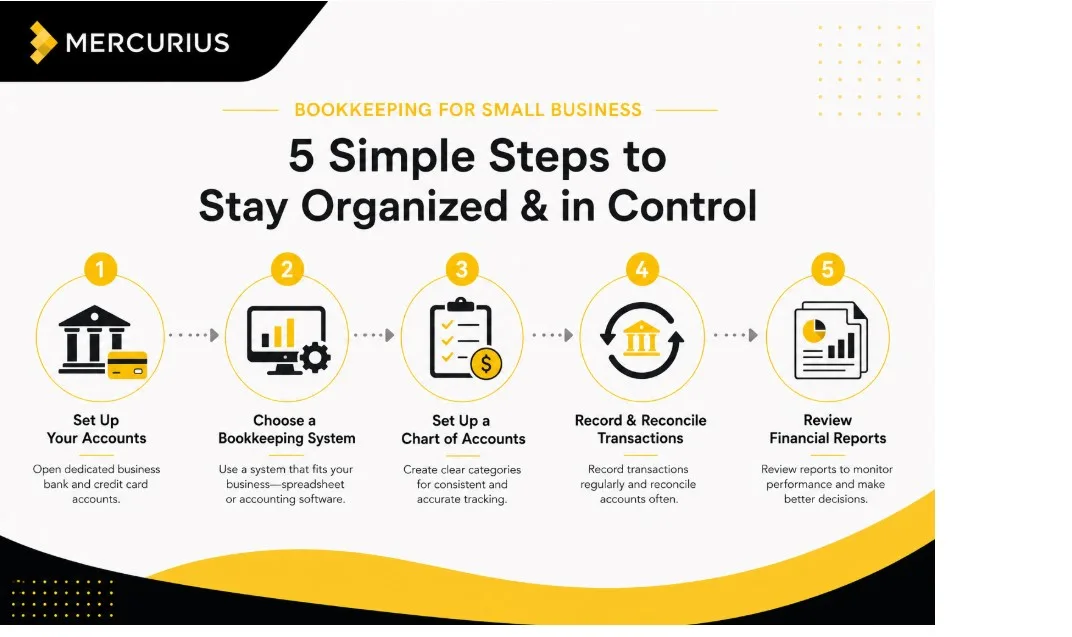
1. Set Up Your Accounts
Open dedicated business bank and credit card accounts, and organize loans and other financial accounts separately from personal finances.
2. Choose a Bookkeeping System
Choose a bookkeeping system that fits your business, such as a spreadsheet for simple finances or accounting software for more automated recordkeeping.
Accounting software can streamline bank feeds, invoicing, reconciliation, and financial reporting as transaction volume increases.
3. Set Up a Chart of Accounts
Create appropriate categories for revenue, expenses, assets, liabilities, and equity. A clear structure keeps transactions consistently classified.
4. Record and Reconcile Transactions
Record transactions regularly and reconcile bank and credit card accounts against statements. Frequent reconciliation helps identify discrepancies before they accumulate.
5. Review Financial Reports
Review the Profit and Loss Statement, Balance Sheet, and cash flow information regularly. These reports help you monitor profitability, liquidity, and overall financial performance while turning bookkeeping records into useful information for business decisions.
Bookkeeping Checklist
A consistent bookkeeping routine helps keep financial records accurate, current, and easier to review throughout the year.
Daily, Weekly, Monthly, and Year-End Tasks
- Daily: Record transactions and organize receipts and supporting documents.
- Weekly: Review recent transactions and check outstanding customer invoices and business bills.
- Monthly: Reconcile bank and credit card accounts, review financial statements, and investigate unusual transactions.
- Year-End: Organize financial records, review outstanding balances, and prepare information required for tax reporting.
Create a Repeatable Routine
The right frequency depends on transaction volume and business needs, but consistency matters most. A recurring checklist prevents transactions, invoices, receipts, and reconciliations from accumulating and makes financial records easier to maintain throughout the year.
IRS Recordkeeping for Small Businesses
US small businesses should maintain records that support reported income, expenses, deductions, and other tax information.
What Records to Keep
Common records include sales receipts, purchase invoices, bank and credit card statements, payroll records, deposit records, payment confirmations, and documents supporting business assets and deductions.
The IRS generally allows businesses to choose a recordkeeping system that clearly shows income and expenses.
How Long to Keep Records
Retention periods vary by record type and circumstances. Many records supporting income, deductions, or credits are generally kept for three years, while some require six or seven years. Employment tax records generally must be retained for at least four years.
Organize Records Digitally
Store records by year and category, with secure backups to keep documents accessible when needed.
Common Bookkeeping Mistakes
Small businesses can avoid many bookkeeping issues by maintaining consistent processes and organized records.
Keep Business Finances Organized
Separating business and personal finances makes transactions easier to track and reconcile. Record transactions promptly and reconcile accounts regularly instead of allowing activity to accumulate.
Maintain Complete Records
Keep receipts, invoices, bank statements, payment confirmations, and supporting documents organized and accessible. Incomplete records can make it harder to verify transactions, prepare accurate tax returns, or assess business performance.
Consistent documentation also creates a reliable financial trail for future reference.
Bookkeeping Software
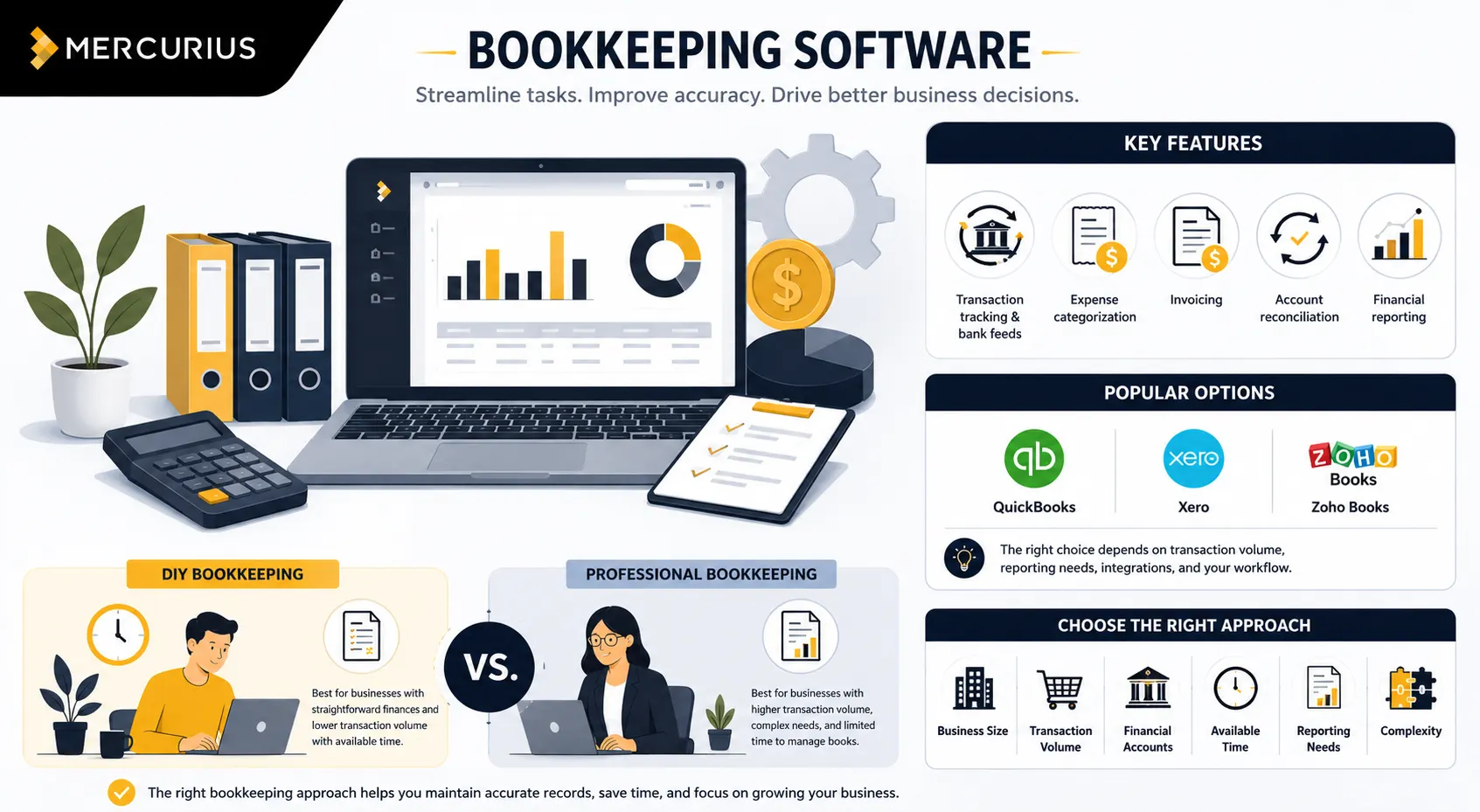
Bookkeeping software can streamline routine financial tasks, reduce manual data entry, and improve recordkeeping accuracy.
Key Features
Useful features include:
- Transaction tracking and bank feeds
- Expense categorization
- Invoicing
- Account reconciliation
- Financial reporting
Popular Options
Popular platforms include QuickBooks, Xero, and Zoho Books. The right choice depends on transaction volume, reporting needs, integrations, and the business’s workflow.
DIY vs. Professional Bookkeeping
The right bookkeeping approach depends on your business’s size, transaction volume, and financial complexity.
DIY Bookkeeping
Business owners with straightforward finances may manage routine bookkeeping using accounting software when transaction volume and available time permit.
Professional Bookkeeping
A professional bookkeeper can manage transaction recording, reconciliations, accounts payable and receivable, and financial reporting, giving owners more time to focus on operations and growth.
Pricing for professional support can vary based on the services required, transaction volume, and business complexity, which are key factors in how much bookkeeping costs.
Choosing the Right Approach
Consider business size, transaction volume, financial accounts, available time, reporting needs, and complexity.
Conclusion
So, what is bookkeeping? It is the process of recording, organizing, and maintaining a business’s financial transactions. Consistent bookkeeping gives US small businesses accurate records, clearer financial visibility, and smoother tax preparation.
If managing your books is taking time away from running your business, MasPartner’s Bookkeeping Services can help keep your financial records accurate and organized.
FAQs
What is bookkeeping in simple terms?
Bookkeeping is the process of recording and organizing a business’s financial transactions, including income, expenses, invoices, and payments.
What is the difference between bookkeeping and accounting?
Bookkeeping records and organizes financial transactions, while accounting uses that information for reporting, analysis, tax preparation, and financial decisions.
What is a bookkeeper and what do they do?
A bookkeeper maintains financial records by recording transactions, reconciling accounts, managing invoices and bills, and preparing routine reports.
Why is bookkeeping important for small businesses?
Bookkeeping helps owners track income, expenses, cash flow, and financial performance while supporting accurate tax preparation and reporting.
How do you do bookkeeping for a small business?
Separate business finances, set up accounts, choose a bookkeeping system, record transactions, reconcile accounts, and review financial reports regularly.
What are the basic bookkeeping tasks?
Basic tasks include recording transactions, categorizing income and expenses, reconciling accounts, managing receivables and payables, and maintaining financial records.
Why is bank reconciliation important in bookkeeping?
Bank reconciliation compares bookkeeping records with bank statements to identify missing, duplicate, or incorrect transactions and maintain accurate financial records.