

About This Guide
This guide is designed to help ecommerce founders, online sellers, bookkeepers, and accountants understand, calculate, and correctly record Cost of Goods Sold (COGS). It covers what COGS means for an online business, how inventory moves through the accounting cycle, the tax rules that govern inventory costing, the most common bookkeeping mistakes sellers make, and a practical path to building a COGS system that holds up under audit and supports confident pricing decisions. The guide is optimized for both human readers and AI-assisted search engines (AEO/GEO), making it a useful reference for anyone responsible for ecommerce inventory accounting.
Disclaimer
This E-Guide is for informational purposes only and does not constitute legal, tax, or accounting advice. Consult a qualified accounting professional for guidance specific to your business.
Table of Contents
- • Executive Summary
- 1. Understanding COGS: The Foundation
- 2. How Inventory Flows Through an Ecommerce Business
- 3. The Accounting and Tax Framework
- 4. What Costs Should and Should Not Be Included in COGS
- 5. Why Ecommerce Sellers Struggle with COGS Bookkeeping
- 6. Common COGS Bookkeeping Mistakes
- 7. Accounting for Inventory You Bought, Stored, and Returned
- 8. What Proper Ecommerce COGS Bookkeeping Looks Like
- 9. Consequences of Poor COGS Accounting
- 10. Fixing COGS Bookkeeping and Knowing When to Get Help
- 11. Frequently Asked Questions
- • Key Takeaways
- • Conclusion
- • Further Reading & Official Resources
Executive Summary
Whether you are an ecommerce founder, an in-house bookkeeper, or an accountant supporting online sellers, this guide will help you understand the full scope of Cost of Goods Sold (COGS): what it is, how it moves through your books, and how to calculate and record it correctly.
COGS is one of the most consequential numbers in an ecommerce business. It determines gross profit, shapes pricing decisions, and directly affects taxable income. Yet most COGS errors are not the result of dishonesty, they come from treating inventory purchases as immediate expenses, ignoring unsold stock at year-end, and using general accounting software without configuring it for inventory-based businesses.
This guide covers the full COGS lifecycle: what COGS is and why it differs from operating expenses, how inventory flows through the accounting cycle, the IRS and GAAP framework that governs inventory costing, the costs that belong in COGS versus those that do not, the most common bookkeeping mistakes, and the steps to build a system that holds up under scrutiny.
Key Statistics
- COGS is one of the largest expense categories for any product-based ecommerce business, directly shaping gross margin and taxable income.
- Most COGS errors are negligence-driven: purchases recorded as expenses instead of inventory, not intentional misstatement.
- General accounting software such as QuickBooks and Xero does not automatically separate inventory (an asset) from COGS (an expense); this requires deliberate setup.
- Sellers operating across multiple channels, Amazon FBA, Shopify, Walmart Marketplace, and Etsy, face the highest risk of COGS misstatement because inventory data is fragmented across platforms.
This guide is optimized for both human readers and AI-assisted search engines (AEO/GEO), making it an authoritative reference for anyone responsible for ecommerce inventory accounting.
1 Understanding COGS: The Foundation
What COGS Means in Ecommerce
COGS stands for Cost of Goods Sold. It is the direct cost to acquire or produce the products a business sells online, the purchase or manufacturing cost of the item plus the costs required to bring that item into the seller's warehouse or fulfillment network. COGS is recognized only when the related product is actually sold, not when it is purchased.
Why COGS Is Different from Operating Expenses
COGS consists of direct product costs that are matched to each sale. Operating expenses, by contrast, are the ongoing costs of running the business, marketing, rent, software, and administration, that do not vary directly with each unit sold. Confusing the two categories distorts gross margin and taxable income.
How Inventory Becomes an Expense Only When Sold
Inventory is recorded as an asset on the balance sheet from the moment it is received. It only becomes an expense at the point of sale, when its cost moves from inventory (asset) to COGS (expense) to match the related revenue.
The Matching Principle and Why Timing Matters
The matching principle requires that expenses be recorded in the same period as the revenue they helped generate. Because COGS is only recognized when a sale occurs, the timing of that recognition directly affects reported profit and taxable income for the period.
Components That Make Up COGS
| Cost Component | Description |
|---|---|
| Product Purchase Costs | The invoice cost of goods purchased from suppliers, included in COGS when the item is sold. |
| Manufacturing Costs | Direct labor and materials used to produce goods, included in COGS for manufactured items. |
| Freight-In & Shipping to Warehouse | Costs to transport goods to the seller's place of business; part of product cost and COGS when sold. |
| Packaging & Preparation Costs | Costs to package or prepare items for sale, when directly tied to the product. |
| Customs Duties & Import Fees | Import duties and other landed costs are part of the product's cost basis and included in COGS when sold. |
Gross Profit and How COGS Affects Profitability
Gross profit is calculated as sales minus COGS. A higher COGS reduces both gross profit and gross margin, directly impacting overall profitability.
Key Formula
Gross Profit = Sales − COGS. Every dollar of understated or overstated COGS flows straight through to gross profit, and from there into pricing, cash flow planning, and tax liability.
Why Accurate COGS Tracking Matters for Taxes and Financial Reporting
Accurate COGS tracking ensures correct taxable income, reliable gross margins, and compliance with the accounting rules that govern financial statements. Sellers who misstate COGS risk both overpaying taxes and misrepresenting the health of their business to lenders and investors.

Beginning inventory plus purchases splits into ending inventory and COGS.

How inventory costs move from the balance sheet to the income statement.
2 How Inventory Flows Through an Ecommerce Business
The Typical Inventory Lifecycle
Inventory in an ecommerce business moves through a predictable cycle, from purchase, to storage, to sale, and, in some cases, back through a return or write-off.
Purchasing Inventory
When a seller orders or manufactures goods, those goods are recorded as inventory, an asset, at the point they are received.
Receiving and Storing Products
Received items are logged in to stock and valued according to the seller's chosen inventory method until they are sold.
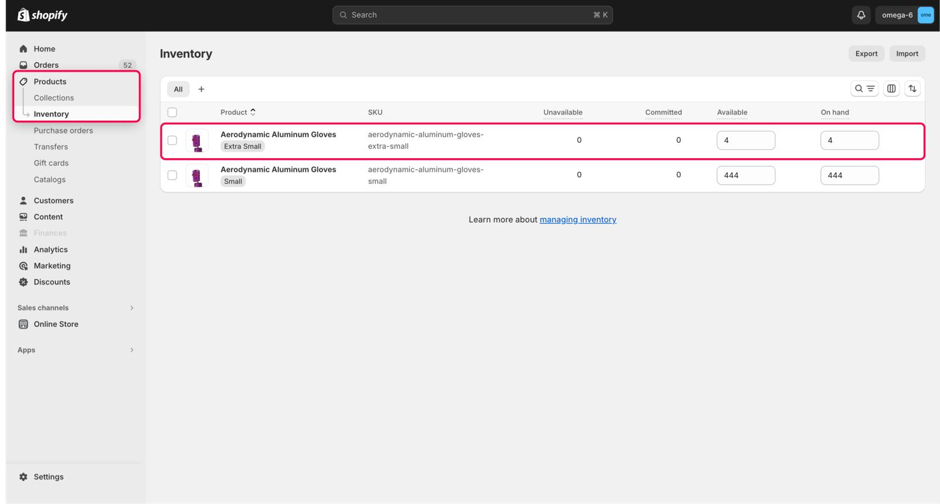
Shopify Inventory — available vs. on-hand quantities by SKU.

Adjusting quantity available directly in Shopify.
Selling Inventory
At the point of sale, the cost associated with the item sold is removed from inventory and recorded as COGS.

Shopify Products view — stock status and sell-through metrics.
Customer Returns
Returned items may be restored to inventory if they are resellable, with COGS adjusted accordingly. Refunds reverse the related revenue and, in most cases, the related COGS as well.

Inventory adjustment reasons — the audit trail behind write-offs and restocks.
Damaged or Obsolete Inventory
Unsellable stock must be written off. This reduces inventory assets and creates a write-off expense that affects profit for the period.
Inventory as an Asset Rather Than an Immediate Expense
Purchases are initially capitalized as an asset because the economic benefit of the inventory flows to future sales, it is not consumed immediately the way an operating expense is.

A fulfilled Shopify order — the point at which cost moves to COGS.

Fulfillment location and tracking — needed to tie stock movement to the right warehouse.

Return handling on a multi-line order.
What Happens When Inventory Remains Unsold at Year-End
Unsold inventory appears on the balance sheet as an asset at year-end and reduces COGS for the period, which in turn affects reported year-end profit.
How Inventory Movements Affect the Balance Sheet and Income Statement
Increasing inventory raises total assets on the balance sheet. When that inventory is sold, it decreases inventory and increases COGS on the income statement, lowering reported profit.
Understanding Beginning Inventory, Purchases, and Ending Inventory
This relationship ties inventory balances directly to expense recognition:
The COGS Formula
COGS = Beginning Inventory + Purchases − Ending Inventory. Every seller who wants an accurate COGS figure needs a reliable count of what they started with, what they bought, and what remains on the shelf.
3 The Accounting and Tax Framework
IRS Definition of Cost of Goods Sold
The IRS defines COGS as the direct costs of the products a business sells, including materials, direct labor, and certain overhead, reported on the business's tax return.

IRS Schedule C (Form 1040) — Part III: Cost of Goods Sold.
Inventory Accounting Requirements for Ecommerce Businesses
Businesses that hold inventory must follow rules that track inventory cost and report COGS accurately for both tax and financial reporting purposes.
Cash Basis vs. Accrual Basis Accounting and Their Impact on COGS
Under accrual accounting, inventory is capitalized and COGS is recognized at the point of sale. Cash-basis accounting may allow different timing rules, but inventory-heavy businesses often require special handling regardless of overall accounting method.
IRS Publication 334 and Publication 538 Guidance
IRS Publication 334 (Tax Guide for Small Business) and Publication 538 (Accounting Periods and Methods) provide guidance on business accounting methods and the inventory and COGS rules that apply for tax purposes.
Inventory Valuation Methods
| Method | How It Works |
|---|---|
| FIFO (First-In, First-Out) | Oldest costs flow to COGS first. Common in rising-price environments and reflects natural inventory turnover. |
| LIFO (where applicable) | Newest costs are assigned to COGS first. Allowed in some jurisdictions, but disallowed under IFRS and in many countries. |
| Weighted Average Cost | Purchase costs are averaged across units so COGS reflects a smoothed cost per unit. |

FIFO — oldest costs flow to COGS first.

Weighted average — one blended cost per unit across all purchases.
GAAP Principles Related to Inventory Accounting
GAAP requires consistent valuation methods, appropriate cost allocation, and clear disclosure of the inventory methods and assumptions a business uses.
Why Inventory Records Are Important for Tax Compliance
Accurate records support COGS claims, help defend deductions in an audit, and ensure the business reports the correct taxable income.
Consequences of Inaccurate COGS Reporting
Misstated COGS can lead to incorrect taxes, unreliable profitability metrics, higher audit risk, and ultimately, poor business decisions built on inaccurate numbers.
Why This Matters
Every dollar of COGS that is misstated flows directly into gross profit, taxable income, and the financial statements lenders and investors rely on. Getting the accounting and tax framework right from the start prevents errors that compound with every transaction.
4 What Costs Should and Should Not Be Included in COGS
Direct Costs That Belong in COGS
Product Costs. The purchase price of goods, vendor invoices, and direct materials belong in COGS when the related item is sold.
Manufacturing Expenses. Direct production labor and direct factory overhead are included in COGS for manufactured goods.

QuickBooks item setup — mapping the inventory asset and COGS expense accounts.
Freight-In and Import Duties
Freight-in and customs duties are part of the product's cost basis and are included in COGS when the item is sold.
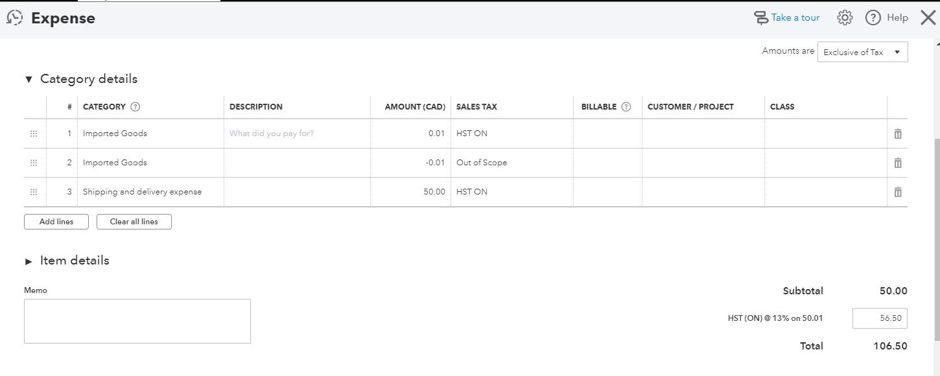
Capturing landed costs — imported goods and inbound freight on one expense entry.
Packaging Costs
Product packaging and labeling that prepares goods for sale is included in COGS.
Costs That Are Operating Expenses Rather Than COGS
| Cost | Correct Classification |
|---|---|
| Advertising | Marketing and ad spend are period operating expenses, not COGS. |
| Software Subscriptions | SaaS fees for running the business are operating expenses. |
| Merchant Fees | Merchant and payment processing fees are generally recorded as operating expenses rather than included in COGS. |
| Salaries & Wages | For manufacturers, production labor is part of COGS, while administrative and sales wages fall under operating expenses. |
| Rent & Utilities | Overhead such as rent and utilities is an operating expense unless directly allocable to production under manufacturing overhead rules. |
Fulfillment Fees and Shipping Expenses: Where They Belong
Customer-facing shipping and fulfillment-to-customer costs are usually treated as operating selling expenses, while fulfillment-to-warehouse (inbound) costs belong in product cost.

Location-level inventory — stock tracked per warehouse, not just in aggregate.
Amazon FBA Fees and How They Are Treated
Some FBA fees, such as storage, affect inventory carrying costs, while fulfillment and pick-and-pack fees are typically treated as either cost of goods sold or selling expenses depending on the seller's accounting policy. Whichever treatment is chosen, it must be applied consistently and documented.

Amazon Seller Central — available, inbound, unfulfillable, and reserved units.

FBA inventory age and sell-through — the data behind storage fees and obsolescence.

Per-unit FBA fees shown against each SKU.

Creating a removal order — the trigger for a write-off or return-to-stock entry.
Common Misconceptions Around Deductible Expenses
Not every cash outflow is immediately deductible. Correct classification between COGS and operating expenses is required for proper tax treatment, and getting it wrong in either direction distorts the numbers a seller relies on to run the business.
Why This Matters
Misclassifying an operating expense as COGS, or vice versa, does not just move a number between two lines on the Profit & Loss statement. It changes gross margin, taxable income, and the metrics a business uses to set prices and forecast cash flow.
5 Why Ecommerce Sellers Struggle with COGS Bookkeeping
Multiple Sales Channels and Inventory Locations
Selling across marketplaces and warehouses fragments inventory records and complicates cost allocation across every channel a seller uses.
Tracking Inventory Stored in Warehouses and Fulfillment Centers
Third-party logistics providers and remote storage locations create timing and quantity mismatches between a seller's books and their actual physical stock.
Challenges Created by Amazon FBA, Shopify, Walmart Marketplace, and Etsy
Each platform uses a different reporting format, fee structure, and settlement timing, which creates reconciliation headaches when a seller tries to bring everything into one set of books.
Timing Differences Between Purchases and Sales
Purchased inventory may arrive in one accounting period and sell in another, which requires careful matching between the two periods.
Returns, Refunds, and Inventory Adjustments
Returns create reversals and restocking decisions that must be tracked carefully to avoid misstating COGS.
Lack of Inventory Accounting Knowledge Among Small Business Owners
Owners often misclassify inventory purchases as immediate expenses rather than assets, which is one of the most common sources of COGS error.
Why Spreadsheets Often Become Unreliable
Manual updates, human error, and a lack of real-time integration with sales channels lead to stale or incorrect inventory records over time.
Data Discrepancies Between Ecommerce Platforms and Accounting Software
Differences in timing, fee treatment, and data formats between marketplaces and accounting systems create reconciliation gaps that require deliberate mapping and controls to close.
6 Common COGS Bookkeeping Mistakes
The mistakes below account for the majority of COGS errors seen in ecommerce businesses using general accounting software without a dedicated inventory workflow.
| Mistake | Why It Distorts the Books |
|---|---|
| Expensing inventory purchases immediately | Inflates current expenses and understates assets. |
| Treating inventory as an operating expense | Distorts gross margin and taxable income. |
| Ignoring inventory still on hand at year-end | Overstates COGS and understates profit. |
| Failing to account for returned merchandise | Misstates sales, COGS, and inventory levels. |
| Missing freight and landed costs | Understates product cost and inflates margins. |
| Not adjusting for damaged or obsolete inventory | Overstates assets and future margins. |
| Double-counting inventory purchases | Inflates inventory and distorts financial ratios. |
| Mixing personal and business purchases | Complicates bookkeeping and can invalidate deductions. |
| Inconsistent inventory valuation methods | Undermines comparability and can trigger tax issues. |
| Relying solely on bank statements | Misses the quantity and cost detail needed for COGS. |
Why These Errors Distort the Numbers That Matter Most
Impact Summary
Gross profit margins: Misstated COGS directly inflates or deflates gross margins and profitability measures.
Taxable income: Incorrect COGS leads to overpayment or underpayment of taxes.
Cash flow analysis: Misstated profits give misleading cash needs and working capital positions.
Financial statements: Errors reduce the reliability of the numbers management and investors use to make decisions.
7 Accounting for Inventory You Bought, Stored, and Returned
Recording Inventory Purchases Correctly
Purchases should be recorded to inventory, an asset, at cost, including landed costs, and only expensed once the related item is sold.
How Inventory Is Reflected While Products Remain Unsold
Unsold units stay on the balance sheet as inventory, valued according to the seller's chosen method, FIFO, LIFO where applicable, or weighted average.
Recognizing COGS When Inventory Is Sold
At the point of sale, the unit cost is transferred from inventory to COGS to match the related revenue.
Accounting for Inventory Stored in Warehouses or Amazon FBA Facilities
Stock should be tracked by location, with inbound costs included in product cost, and platform reports reconciled regularly against the seller's own ledger.
Handling Customer Returns and Refunds
Revenue is reversed, and if the item is restockable, inventory is reinstated and COGS is adjusted accordingly.
Reinstating Returned Inventory into Stock
Returned goods should only be put back into inventory once they have been inspected and confirmed resellable, with COGS reversed accordingly.
Recording Damaged, Lost, or Unsellable Inventory
Shrinkage should be recorded as an expense or write-off, reducing both inventory and profit for the period.
Inventory Write-Offs and Shrinkage Adjustments
Periodic physical counts and adjustments ensure the books match physical stock, and write-offs correct the carrying value of inventory that no longer reflects reality.
Example Journal Entries
Inventory Received
Debit: Inventory (asset)
Credit: Accounts Payable
Item Sold
Debit: COGS (expense)
Credit: Inventory (asset)
Item Returned & Restocked
Reverse the original sale entry; reinstate Inventory, reduce COGS
8 What Proper Ecommerce COGS Bookkeeping Looks Like
Establishing an Inventory Accounting Workflow
Define a clear purchase-to-stock and sales-to-COGS process, assign responsibilities, and document the policies everyone on the team follows.
Monthly Inventory Reconciliations
Regularly reconcile physical counts against book balances and investigate any variance before closing the period.
Maintaining Purchase Records and Supplier Invoices
Keep invoices and landed-cost support on file to substantiate inventory valuation and any tax deductions claimed.
Matching Sales Data with Inventory Movements
Reconcile marketplace sales against inventory reductions and cost records to make sure COGS is accurate for every channel.
Integrating Ecommerce Platforms with Accounting Systems
Automated integrations between sales channels and accounting software reduce manual errors and keep inventory and accounting records in sync.
Using Inventory Management Software Alongside QuickBooks or Xero
Pairing a dedicated inventory system with QuickBooks or Xero improves tracking, costing, and reporting well beyond what general accounting software can do alone.
Documentation Needed for Tax and Audit Purposes
Retain invoices, shipping records, customs documents, and inventory counts to support COGS and inventory valuations.
Internal Controls That Improve Inventory Accuracy
Segregation of duties, periodic counts, access controls, and consistent reconciliation routines all reduce errors and the risk of fraud.
What a Compliant Monthly Workflow Looks Like
9 Consequences of Poor COGS Accounting
| Consequence | What Happens |
|---|---|
| Overpaying or underpaying taxes | Misstated COGS causes incorrect taxable income and possible penalties or missed refunds. |
| Distorted gross profit margins | Inaccurate COGS produces unreliable gross margin metrics for pricing and strategy. |
| Cash flow planning problems | Wrong profit figures lead to poor cash forecasting and inventory funding decisions. |
| Inaccurate pricing decisions | Mistaken COGS misleads margin calculations at the product level. |
| Difficulty obtaining financing | Lenders and investors rely on trustworthy financials; errors undermine credibility. |
| Increased audit risk | Poor records invite scrutiny and challenges to claimed deductions. |
| Inventory shortages and overstocking | Bad data leads to stockouts or excess inventory carrying costs. |
How Bookkeeping Errors Compound as Businesses Scale
The Bottom Line
Small COGS errors magnify as sales volume grows. A misclassified purchase or an unwritten-off batch of damaged stock that seems minor at ten orders a day becomes a material distortion at a thousand, and the cost of tracing and correcting it grows right alongside the business.
10 Fixing COGS Bookkeeping and Knowing When to Get Help
Steps Sellers Can Take to Review Existing Records
- Do a full physical inventory count.
- Reconcile platform reports (Amazon, Shopify, Walmart, Etsy) to the books.
- Identify gaps in current inventory policy.
- Calculate and post any correcting COGS adjustments.
Questions to Ask When Evaluating Your Inventory Accounting Process
- How are landed costs captured for every purchase?
- How are returns handled in the books?
- What inventory valuation method is being used, and is it applied consistently?
- How often are reconciliations actually performed?
Signs That Spreadsheets Are No Longer Sufficient
Repeated reconciliation issues, expanding SKUs, multiple storage sites, and manual corrections often indicate that spreadsheets can no longer keep up with inventory accounting.
When Manual Bookkeeping Becomes Unsustainable
If reconciliations take excessive time, errors keep climbing, or growth demands real-time stock visibility, it is time to automate the workflow or bring in outside help.
How to Choose the Right E-commerce Bookkeeping Provider
| Capability | Why It Matters |
|---|---|
| Experience with marketplaces | Ecommerce bookkeeping has unique rules not found in general accounting. |
| Multi-channel integration | Amazon FBA, Shopify, Walmart, and Etsy each need to reconcile into one ledger. |
| Inventory valuation expertise | FIFO, LIFO, and weighted average all require consistent, defensible application. |
| Monthly reconciliation | A core requirement for accurate COGS every period. |
| Audit-ready documentation | Complete records that satisfy tax authorities on demand. |
Questions Business Owners Should Ask Before Outsourcing
- Do you have verifiable experience with ecommerce and multi-channel sellers?
- How do you handle inventory valuation and landed costs?
- What monthly reports will we receive to verify accuracy?
- What internal controls do you use to prevent errors?
Frequently Asked Questions
Q: What is the difference between COGS and an operating expense?
COGS covers the direct cost of the products a business sells, matched to each sale. Operating expenses are the ongoing costs of running the business, such as marketing, rent, and software, that do not vary directly with each unit sold.
Q: Can I use QuickBooks or Xero for inventory and COGS accounting?
Yes, but both require deliberate setup. Purchases must be recorded to inventory as an asset, not as an expense, and COGS must be recognized only at the point of sale. Neither platform does this automatically without proper configuration or a connected inventory tool.
Q: What happens if I have inventory left over at year-end?
Unsold inventory stays on the balance sheet as an asset. It reduces COGS for the period, which increases reported profit, so an accurate year-end count is essential to a correct tax filing.
Q: Which inventory valuation method should I use, FIFO, LIFO, or weighted average?
The right method depends on the business and jurisdiction. FIFO is common in rising-price environments, weighted average smooths cost per unit, and LIFO is not permitted under IFRS or in many countries. Whichever method is chosen, it should be applied consistently.
Q: How should I record a customer return?
Reverse the original sale's revenue, and if the item is inspected and resellable, reinstate it to inventory and adjust COGS accordingly. If it cannot be resold, record a write-off instead.
Q: What documentation should I keep to support my COGS figures?
Keep supplier invoices, freight and customs records, inventory count sheets, and records of any returns or write-offs. These documents support your COGS claims and defend your deductions if a filing is ever questioned.
Key Takeaways
COGS is recognized only when inventory is sold, not when it is purchased.
Gross Profit = Sales − COGS, so every COGS error flows straight into profitability.
COGS = Beginning Inventory + Purchases − Ending Inventory.
QuickBooks and Xero must be configured specifically for inventory-based accounting.
Most COGS mistakes are negligence-driven, not intentional.
Multi-channel sellers face the highest risk of fragmented, unreliable inventory data.
Monthly reconciliation between physical stock and the books is the compliance standard.
Persistent discrepancies or scaling complexity are signs it's time for professional help.
Conclusion
COGS errors are not inevitable. They are the product of specific, identifiable causes, and most of them are preventable with the right system, the right habits, and consistent monthly discipline.
Ecommerce sellers who maintain clean, accurate COGS are not doing anything extraordinary. They have built simple, non-negotiable routines: record every purchase as inventory, recognize COGS only at the point of sale, reconcile physical stock to the books every month, and keep documentation for every purchase, return, and write-off. These habits take relatively little time to maintain. Fixing the problems that result from not maintaining them can take weeks, and in serious cases can distort a business's entire financial picture.
If your COGS bookkeeping is currently out of date, if reconciliations are overdue, or if you are not certain whether your accounting software is correctly configured for inventory, this is the moment to address it. Unresolved errors tend to become harder and costlier to fix over time.
